Have you already bought another flower? Or a mixed bouquet, maybe? Doesn’t matter! What matters is your intent, your strong feelings, and that you remembered.
However, the topic of our blog today is providing an answer: Are there any traditional Mother’s Day flowers?
According to research, stories, and of course, traditional gifts, there are. And we’ll discover them in this specialised Ode à la Rose blog on Mother’s Day flowers.
What Are Traditional Mother’s Day Flowers?
Mother’s Day wasn’t the polished, gift-heavy occasion we know today. It started with gratitude. With love. With a small attention, but deeply intentional.
A simple flower set everything in motion, and it all began one spring with a white carnation.
That choice didn’t just mark a moment. It quietly defined what “traditional Mother’s Day flowers” would become. Carnations still hold that place today, but they were never meant to stand alone.
Because spring doesn’t bloom in one note.
Roses, tulips, lilies, and peonies naturally followed, not as replacements, but as part of the same spring flowers seasonal rhythm. These are the flowers that show up when Mother’s Day arrives. Fresh, in bloom, and already carrying meanings tied to love, appreciation, and care.
And that’s really what connects them.
Not a rule. Not a list.
Just timing, symbolism, and the instinct to give something that feels alive, seasonal, and right.
The History of Traditional Mother’s Day Flowers
Mother’s Day didn’t start with flower delivery or gifting traditions.
It grew out of social movements led by women working to improve health, community, and living conditions. The connection between Mother’s Day and flowers came later, shaped by one defining gesture and reinforced by timing, availability, and meaning.
The Origin of Mother’s Day and Carnations
In the mid-19th century, Ann Reeves Jarvis organized “Mothers’ Work Clubs” focused on sanitation and reducing disease in local communities.
After the Civil War, she expanded these efforts into “Mother’s Friendship Days,” bringing together families on opposing sides of the conflict.
Her daughter, Anna Jarvis, transformed that legacy into what we now recognize as Mother’s Day.
In 1908, she held a memorial honoring her mother and distributed white carnations to attendees. The choice was personal but deliberate. Carnations were associated with endurance and structure, qualities she connected to maternal care.
This moment marked the first clear link between Mother’s Day and a specific flower. As documented by Smithsonian Magazine, carnations quickly became the symbol of the holiday.
By 1914, when Mother’s Day was officially established in the United States, they were already widely recognized as its defining bloom.
Over time, their meaning differentiated. White carnations became associated with remembrance, while pink carnations were given in honor of living mothers.
This distinction helped reinforce their role as the most traditional Mother’s Day flower.
How Flowers Became a Mother’s Day Tradition
The expansion beyond carnations was not driven by a single shift, but by consistency in season and supply.
Mother’s Day falls in May, aligning with the peak availability of several spring flowers commonly used in Mother’s Day bouquets, including roses, tulips, lilies, and peonies.
Florists began incorporating these flowers into arrangements because they were fresh, abundant, and visually aligned with the season.
Their existing symbolism, centered on love, appreciation, and care, made them suitable additions without requiring new meaning.
This pattern solidified over time. Consumers continued to associate flowers with the holiday, and florists continued to build offerings around what was naturally available.
According to the Society of American Florists, Mother’s Day remains one of the highest-volume periods for flower sales, confirming the long-standing connection between the occasion and floral gifting.
Most Traditional Mother’s Day Flowers
We already mentioned that seasonal availability defined the traditional Mother’s Day flowers worldwide. In addition, we’ll focus on the ones that are most gifted for the holiday.
Carnations
If there’s one flower that can claim the title of “original Mother’s Day bloom,” it’s the carnation and not in a vague, symbolic way, but in a very specific, documented moment.
In 1908, Anna Jarvis handed out white carnations at the first official Mother’s Day gathering in West Virginia. She chose them because they were her mother’s favorite, but also because they didn’t shed their petals easily.
To her, that meant something. Enduring love, quiet loyalty, the kind that doesn’t fall apart under pressure.
But traditions rarely stay still.
Roses
Roses entered the scene not as replacements, but as expansions of the emotional vocabulary.
Centuries of literature, art, and cultural use have already done the work. What makes them interesting in the context of Mother’s Day is not just their symbolism, but their flexibility.
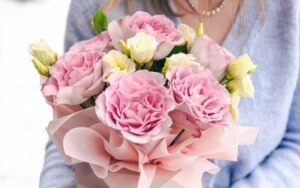
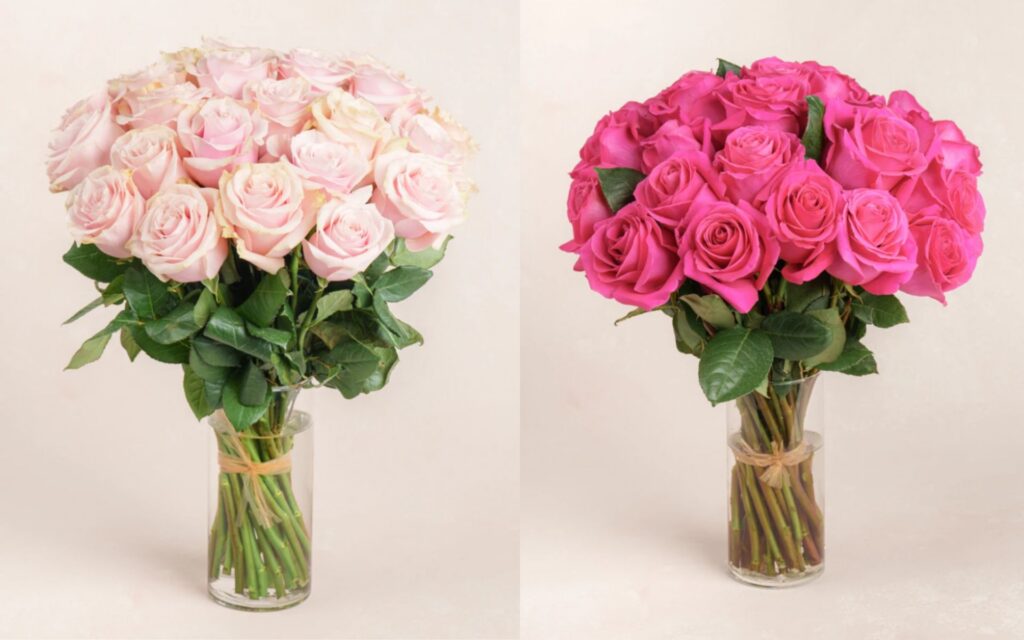
A soft pink rose doesn’t say the same thing as a red one, and that nuance matters. Pink roses, often associated with gratitude and admiration, align almost instinctively with how we tend to feel about our mothers.
Soft and pleasant, comfortable and nurturing.
That’s why roses feel like such a natural choice here. Not because they’re traditional in the strict sense, but because they’ve always been capable of adapting to the moment.
Tulips
Tulips don’t carry emotional weight in the same way roses do, and that’s exactly their advantage.
They feel lighter. Cleaner. Almost conversational.
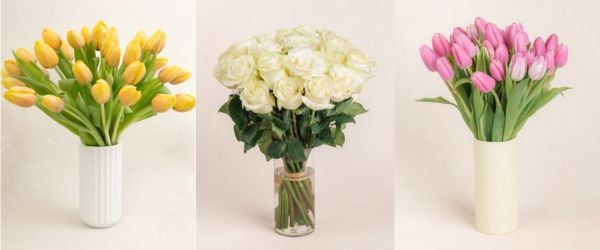
There’s no need to decode them or attach layers of meaning. A bouquet of tulips feels like something you give when the relationship is already understood, when you don’t need symbolism to do the heavy lifting.
Still, their story isn’t simple.
Centuries ago, tulips sparked one of the first recorded economic bubbles in history, when rare bulbs in the Netherlands were traded at astonishing prices. That intensity is long gone, but the one thing that hasn’t changed is their timing.
They bloom exactly for Mother’s Day.
And that’s part of why they’ve become so closely tied to this holiday. Not through symbolism, but through seasonality.
Lilies
Lilies tend to speak more softly.
They’re often associated with devotion and motherhood across different cultures, but not in a way that demands attention. Their structure is deliberate, almost architectural, with each bloom opening with a sense of order.
What makes lilies interesting is that they’re often chosen for moments that require composure. Not just celebration, but reflection. They carry a kind of emotional balance, which is rare.
They don’t define the occasion, but their versatility deepens it.
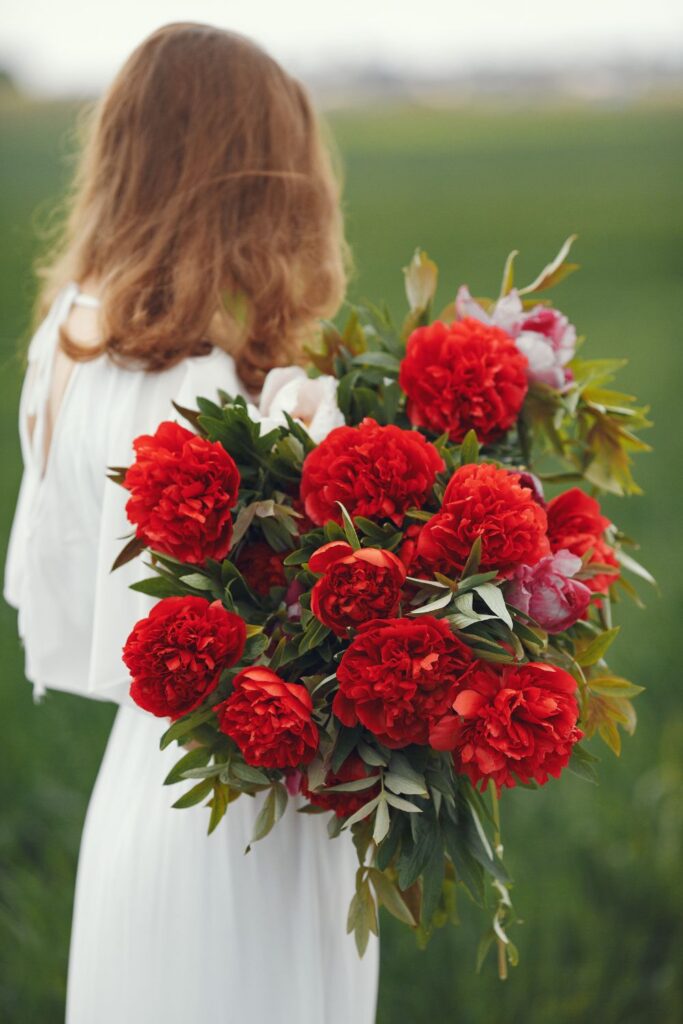
Peonies
Peonies don’t arrive early. They make you wait.
Their bloom window is short, sometimes just a couple of weeks, which gives them a kind of specially-appreciated urgency. If you miss them, you miss them. And that fleeting nature changes how people see them.
They’re not everyday flowers. They’re seasonal, anticipated.
In many cultures, especially across East Asia, peonies have been linked with prosperity, care, and feminine strength. Not delicate beauty, but full, generous presence.
And maybe that’s why they resonate so strongly for Mother’s Day, the most important woman of our lives.
Because some gestures aren’t meant to last forever. Just long enough to be remembered.
Traditional Mother’s Day Flower Colors and Their Meaning
Flowers may start the conversation, but color is what finishes it.
Long before people debated which bouquet to order for Mother’s Day, color was already doing the quiet work of shaping meaning.
It’s immediate.
You don’t analyze it, you feel it.
Pink Flowers
Pink doesn’t try to impress. It settles in.
That’s probably why pink flowers became the default tone for Mother’s Day.
It carries appreciation without intensity, affection without pressure. Somewhere between love and gratitude, which is exactly where most people find themselves when they’re choosing flowers for their mother.
It also connects directly to the history of the holiday. Pink carnations became associated with honoring a living mother, and that idea extended naturally to pink roses and peonies. Different flowers, same message.
White Flowers
White flowers shift the mood to heavenly emotions.
They’re not about celebration in the same way. They’re quieter, more intentional, but still vibrant. Historically, white carnations were used to honor mothers who had passed, which gave the color a lasting association with remembrance.
But even outside that context, white holds its place. It signals respect, sincerity, and a kind of emotional clarity that doesn’t need embellishment. White roses and lilies often appear when the message is more reflective than expressive.
Yellow Flowers
Yellow moves in a different direction. And it suits the holiday just perfectly as there are so many spring yellow flowers you can not just buy, but pick from the ground too!
Warmer, lighter, more open. Yellow flowers bring in a sense of ease, the kind of relationship that’s built on familiarity rather than formality.
They’re often chosen when the moment feels more cheerful and personal. Yellow tulips or roses don’t carry the same historical weight, but they introduce something equally valuable: joy.
Are Carnations Still the Most Traditional Mother’s Day Flower?
Carnations started it. That part hasn’t changed.
They were there at the very beginning, tied directly to the first Mother’s Day and the meaning behind it. That kind of origin gives them a place no other flower can quite claim.
But tradition didn’t stay fixed.
Over time, people expanded beyond carnations, choosing roses, tulips, lilies, and peonies, flowers that felt just as natural for the season and the message. Not replacements, just extensions.
So yes, carnations are still the most traditional Mother’s Day flower.
Just no longer the only one that defines it.
How to Choose a Traditional Mother’s Day Bouquet
Let’s be honest for a second.
Most people don’t struggle with finding a bouquet. They struggle with not wanting it to feel like the same safe, last-minute Mother’s Day choice everyone else is making.
And that’s where a little intention goes a long way.
Choose Flowers with Symbolic Meaning
You don’t need to memorize flower dictionaries, but you do want to avoid sending something that feels… off.
Think of it this way.
- Carnations feel dependable.
- Roses feel appreciative.
- Peonies feel generous, like you went a bit further.
- Lilies feel more composed, almost respectful.
So instead of asking “what’s traditional?”, ask: what does this look like I’m trying to say?
Because the wrong tone shows up faster than the wrong flower.
Consider Seasonal Spring Flowers
If it’s in season, it already works.
Spring basically hands you the answer: tulips are everywhere, peonies show up right on cue, roses start looking their best.
These flowers don’t feel like a choice you had to force, they feel like they belong to the moment.
And that’s the difference between a bouquet that looks good…and one that just feels right when it arrives.
Combine Classic Flowers in a Mixed Arrangement
If you’re overthinking it, don’t pick one. Mix them.
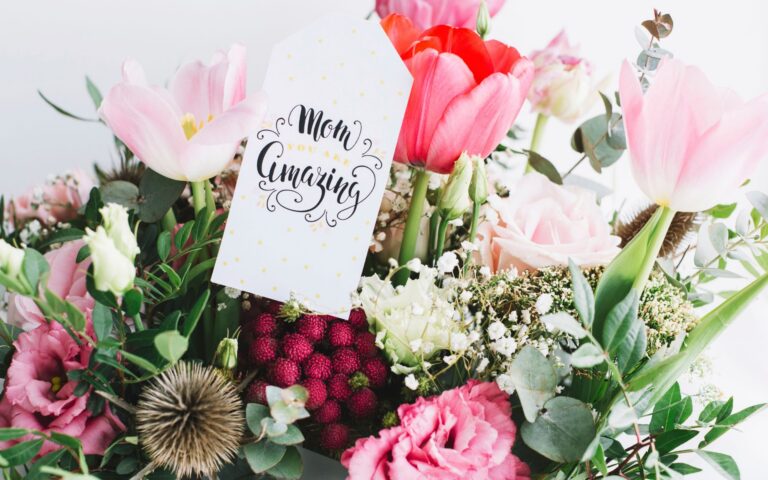
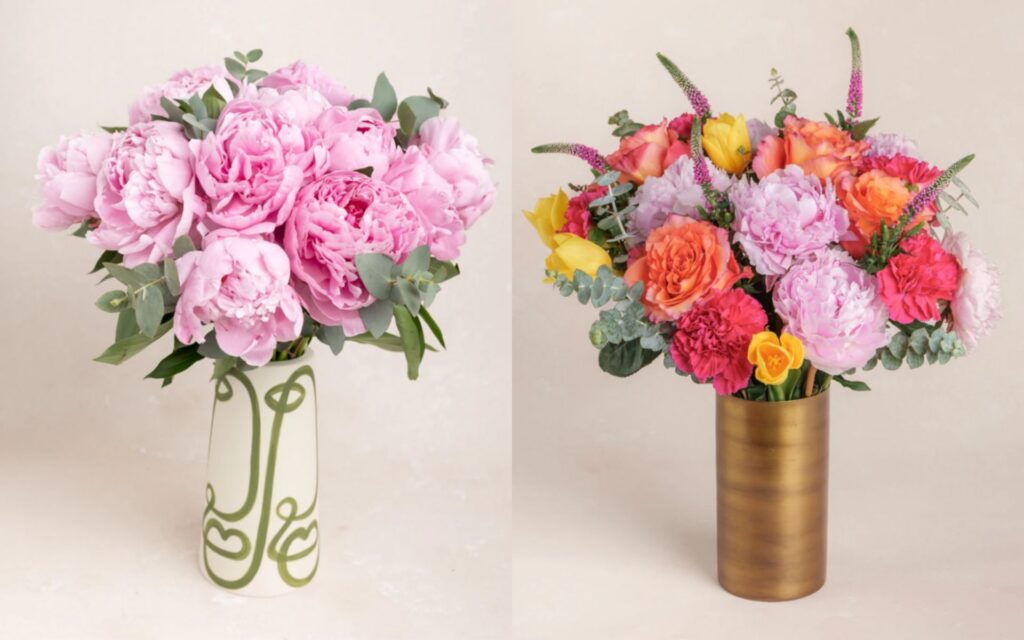
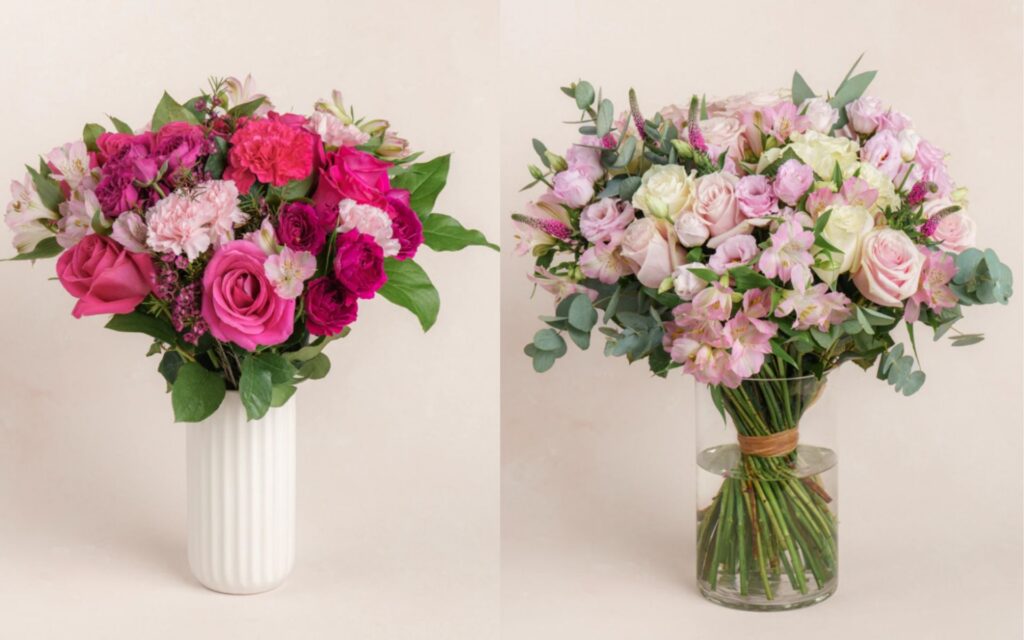
A bouquet with roses and tulips instantly feels softer. Add peonies, and suddenly it looks fuller, more intentional. Throw in lilies, and everything gets a bit more structured.
It’s like building an outfit. One piece works, but a combination makes it yours.
And honestly? A mixed arrangement usually reads as “I thought about this”… even if you decided in five minutes.
Why Flowers Remain the Most Popular Mother’s Day Gift
Flowers shouldn’t win.
They don’t last. They’re not practical. You can’t store them, wear them, or use them next week. And yet, every year, they’re the first thing people reach for.
That’s not an accident.
Flowers do something most gifts don’t even attempt. They arrive, fully formed, carrying meaning without explanation. You don’t have to translate them, justify them, or add context. A bouquet shows up and the message lands instantly.
There’s also timing.
Mother’s Day is right in the middle of spring, when everything feels like it’s starting over. Light changes, colors return, and flowers are at their peak. Giving something that’s already in season feels less like a purchase and more like a continuation of what’s already happening around you.
And then there’s effort, or at least the perception of it.
A well-chosen bouquet feels intentional. Not because it took hours, but because it looks like it did. The color, the texture, the combination, it all reads as thought, even when it was a quick decision. Few gifts manage that balance.
But the real reason is simpler.
Flowers are temporary, and that’s exactly why they matter.
They mark a moment. They don’t try to last forever. They show up, say what needs to be said, and leave behind the feeling that something was acknowledged, properly, at the right time.
That’s hard to replace.
So yes, flowers remain the most popular Mother’s Day gift.
They say what people hesitate to say.
They show up when words fall short.
And somehow, every year, they still feel like the right choice.